Vendor Details
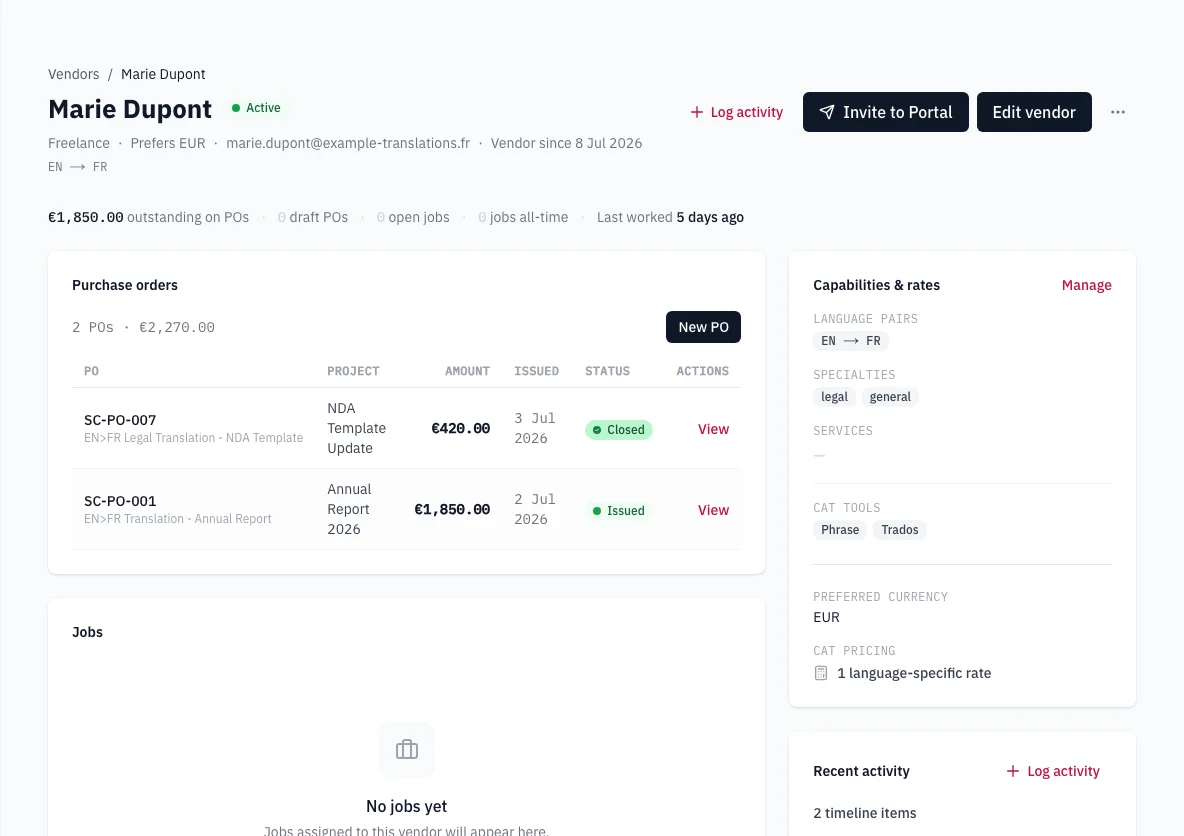
Language pairs, specialisations, rates, and availability — manage your entire translator network from one place.
Language Pairs
Record every language combination a vendor covers. Filter your network by source and target language when assigning jobs.
Specialisation Tags
Tag vendors by domain expertise — legal, medical, technical, marketing. Match the right specialist to the right project.
Rate Tracking
Store per-language, per-tier rates for each vendor. Compare costs across your network before making assignments.
Job History
See every job a vendor has completed, with the ratings your team left against each one.
Turn your translator list into something you can search
A list of translator names isn't much use when you've got a new job and need to know who actually fits it.
VectorLingo gives each vendor a proper record: their language pairs, specialisms, rates and previous work with your agency.
So instead of remembering that “Anna did that German legal job last year”, you can search the information you’ve already collected.
Language pairs and specialisms are structured fields rather than notes buried in a contact record. Rates sit with the vendor too, so you don't have to find one system for their profile and another for what they charge.
Narrow the list before you start emailing people
If you need an English-to-French legal translator, you should be able to start there.
Filter your vendor database by source language, target language and specialism, and VectorLingo shows the people whose stored profile matches what you’re looking for.
It doesn't decide who should get the job. Matching a language pair and a specialism is only part of that decision.
But it gives the project manager a sensible shortlist instead of asking them to search the entire vendor database or rely on whoever comes to mind first.
The vendor's rates are there at the same time, so capability and cost don't have to be checked in two different places.
Keep your own history with each vendor
The useful part of a vendor record isn't just what they told you when they signed up.
VectorLingo also keeps the jobs they've done for your agency and the ratings your team has recorded after completed work.
Those ratings are deliberately based on your team's judgement. VectorLingo doesn't calculate automatic vendor performance scores or turn people into a league table based on system activity.
If your PM had an excellent experience with someone, that can become part of the agency's internal knowledge. If a job was difficult, that context doesn't have to disappear into one person's inbox.
Over time, the vendor record becomes a history of your agency’s own relationship with that translator rather than just a directory entry.
Let vendors maintain their own details
Translators change their rates, add specialisms and take on new language pairs. Their availability changes too.
Through the vendor portal, they can keep their own profile information up to date instead of emailing every change to a project manager who then has to copy it into the database.
Your agency still owns its internal information, including job history and team ratings.
The result is a vendor record that combines what the translator says about themselves with what your own team has learnt from working with them.
Frequently asked questions
What information can I store against a vendor?
Language pairs, specialisations, rates, previous jobs and ratings recorded by your team.
Can I search translators by language and specialism?
Yes. You can filter by source language, target language and specialisation.
Can vendors update their own details?
Yes. Vendors can use the portal to update information such as their language pairs, specialisms and availability.
Does VectorLingo score vendors automatically?
No. Your team can leave ratings after completed work, but VectorLingo doesn't calculate automatic performance metrics.
Ready to try Vendor Details?
Start your free trial today. No credit card required.
Start Agency trial→